

From Conversation to Connection: Mental Health and Wellbeing for Women
A recap of this year’s Social Hour for Social Issues held at Do Greater Sparkhouse Charlotte
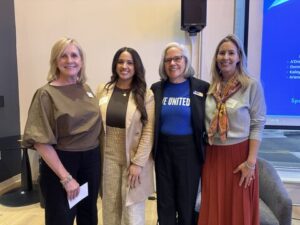
Mental health touches every aspect of our lives, from our personal relationships and daily responsibilities to the wellbeing of our broader community. Yet despite its importance, conversations about mental health can still be difficult to have.
On October 6, Women’s Impact Fund members and guests gathered for our annual Social Hour for Social Issues, an event that brings women together to explore a timely social issue through conversation, connection, and shared learning. This year’s topic, Mental Health and Wellbeing for Women, sparked an insightful and meaningful discussion about the challenges women face, the importance of reducing stigma, and the power of supporting one another.
The event took place at Do Greater’s SparkHouse Chicago, a nonprofit community space that opened in June. Building on Do Greater’s longstanding commitment to the Charlotte community, this exciting new chapter offers a welcoming café and gathering space that provided a fitting backdrop for an evening centered on connection and community. Kelsey Van Dyke, Do Greater’s Director of Educational Innovation & Technology and a 2024 Spark Award recipient, welcome attendees to the space and encouraged those making plans to meet for coffee to consider their comfy cafe for those future meet ups.
Perspectives from Personal Experience to Community Impact
We were honored to hear from three remarkable women whose experiences and leadership brought different perspectives to the conversation:
-
Kate Weaver, President of NAMI (National Alliance on Mental Illness) Charlotte
-
Kathryn Firmin-Sellers, President & CEO of United Way of Greater Charlotte
-
Juliana Lozano, Founder and Executive Director of Despierta
The discussion moderated by Whitney Feld, WIF Education Committee chair, moved from deeply personal stories and individual experiences to the challenges facing our local community and the broader societal implications of mental health. Throughout the evening, several important themes emerged.
Breaking Down Stigma and Barriers to Care
Kathryn Firmin-Sellers emphasized the importance of talking openly about mental health and removing the shame and stigma that too often prevent people from seeking support.

She also encouraged attendees to consider the additional challenges faced by individuals and families experiencing financial insecurity. Navigating mental health care can be complicated even for those with significant resources. For ALICE (Asset Limited, Income Constrained, Employed) households, the barriers can be even greater. Accessing care while managing financial pressures, work responsibilities, and other daily demands adds another layer of complexity to an already challenging system.
Her perspective was an important reminder that mental health is not only a personal issue but also a community issue, closely connected to economic stability and access to resources.
Making Space for Ourselves
Juliana Lozano offered a powerful reminder about the importance of self-care, particularly for women.
As women, we often carry many responsibilities and fulfill numerous roles, whether as professionals, caregivers, partners, friends, or community leaders. In caring for others, it can be easy to put our own wellbeing last.
Juliana encouraged attendees to be intentional about making time for themselves and recognizing that caring for our own mental health is not a luxury, but a necessity.
The Power of Reaching Out and Offering Hope
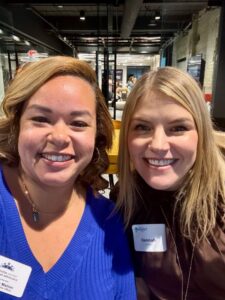
Kate Weaver shared several meaningful ways we can make a difference in the lives of others.
First, reach out to someone who may need to hear from you. A simple check-in, a listening ear, or a willingness to provide a safe, nonjudgmental space can make a meaningful difference.
Second, share what you’ve learned and help connect others with resources. Organizations such as NAMI Charlotte and its Navigator resource can help individuals and families find information and support as they navigate mental health challenges.
And perhaps most importantly, Kate offered a message of hope: Recovery and improvement are possible for people living with mental illness. That message is one worth sharing widely.
Continuing the Conversation
One of the most valuable aspects of Social Hour for Social Issues is the opportunity to learn from one another and strengthen connections across our community. This year’s discussion reminded us that mental health and wellbeing are shaped by both our individual experiences and the systems and communities around us.
It also reinforced that each of us has a role to play. We can help reduce stigma by speaking openly, support others by listening without judgment, share resources with those who need them, and make space to care for ourselves.
We are deeply grateful to Kate Weaver, Kathryn Firmin-Sellers, and Juliana Lozano for sharing their perspectives, experiences, and expertise. We also extend our thanks to Do Greater’s SparkHouse Chicago for welcoming us into its space and to everyone who joined us for this important conversation.
At Women’s Impact Fund, we believe in the power of women coming together to learn, connect, and create positive change. We hope the insights shared during this year’s Social Hour for Social Issues will inspire conversations, connections, and acts of care that continue well beyond the evening itself.
Join us at a future event! All are welcome! Find upcoming events and registration information here